Calculating landscape rock can feel tricky, but it is easier than you might think. All you need are a few measurements, one simple formula, and an understanding of how depth and rock type affect coverage. This guide walks you through how to calculate landscape rock for any area shape, convert inches to feet, and estimate tons or cubic yards confidently. You will also learn to read rock coverage charts, understand rock density, and use online tools more effectively. Whether you are planning a flower bed, garden path, or decorative dry creek, you can calculate landscape rock like a pro.
What “calculate landscape rock” really means
Landscape rock includes decorative and functional stones such as pea gravel, crushed stone, river rock, and lava rock. These materials are often sold by the cubic yard or ton, and the amount you need depends on rock size and depth. Calculating landscape rock accurately helps you control costs, plan deliveries, and avoid ordering excess that could end up unused.
Common landscape rock types and why coverage varies
- Pea gravel: Small, dense, ideal for paths or play areas; covers more square feet per ton.
- River rock: Rounded and heavier, suitable for drainage or creek beds.
- Crushed stone: Angular, locks together well, great for walkways and driveways.
- Lava rock: Lightweight, offers unique texture but may cover less area per ton.
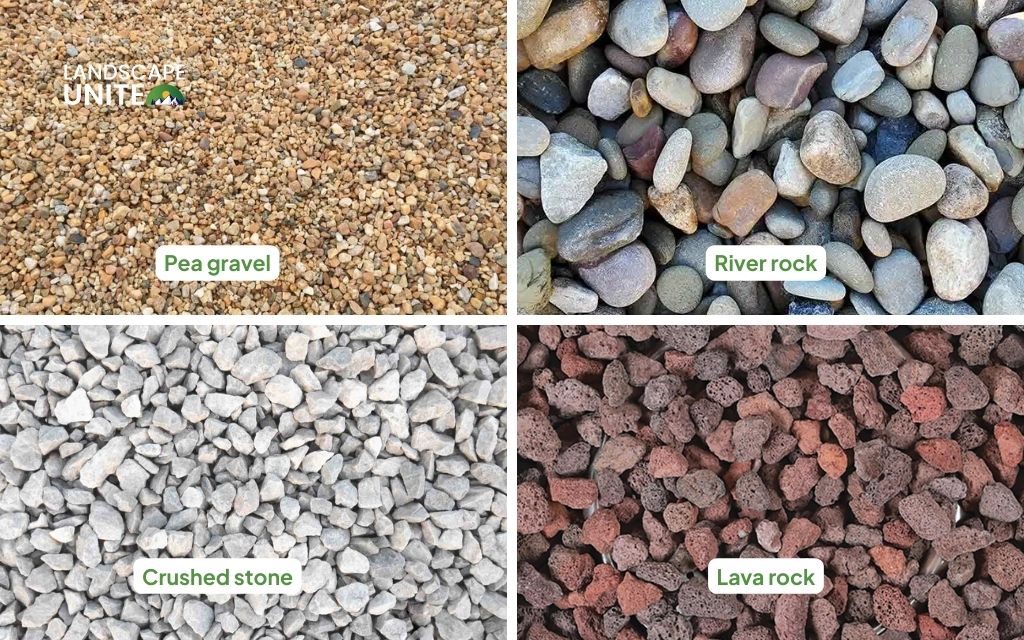
Smaller stone tends to cover more area per ton, while larger rock covers less. Many suppliers show coverage around 120 sq ft per ton at 2 inches deep for small rock, dropping to 40-60 sq ft for larger pieces. Some advanced calculators even adjust coverage based on the density of your chosen material.
Step‑by‑step method to calculate landscape rock
Step 1 – measure your area in feet
Use a tape measure to record the length and width of your space in feet. Multiply them to get the square footage (length × width). For irregular shapes, divide the area into rough rectangles or use the largest rectangle that fits the space for a close estimate.
Step 2 – choose your rock depth
Depth influences both coverage and appearance.
- 2 inches works for light decorative cover.
- 3–4 inches gives better weed control and improved coverage for high‑traffic spaces.
Driveways or dry creek beds may need even deeper layers.
Step 3 – convert to volume in cubic yards
Use the key formula below:
Cubic yards=Length(ft)×Width(ft)×Depth(ft)27
Cubic yards= 27 Length(ft)×Width(ft)×Depth(ft)
Convert inches to feet by dividing by 12 before inserting the depth.
Example:
A front bed that is 10 ft × 6 ft at 2 inches deep
= 10 × 6 × (2 ÷ 12) ÷ 27
≈ 0.37 cubic yards
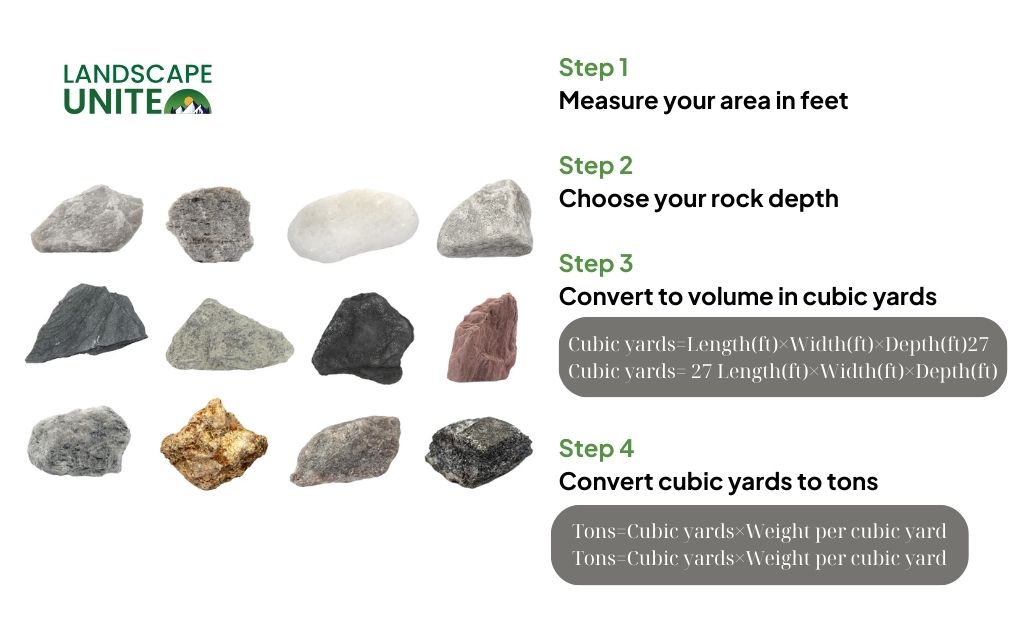
Step 4 – convert cubic yards to tons
Most suppliers sell by the ton, not yard. Multiply your cubic yards by a density factor:
Tons=Cubic yards×Weight per cubic yard
Tons=Cubic yards×Weight per cubic yard
Typical density: 1.4–1.7 tons per cubic yard depending on rock type. Lighter materials like lava rock weigh less.
Examples for different garden shapes
Rectangular beds and borders
For a 12 ft × 8 ft space at 3 inches:
12 × 8 × (3 ÷ 12) ÷ 27 = 0.89 cubic yards
0.89 × 1.6 = about 1.4 tons
Add 5–10% extra for settling or small errors.
Triangular beds and corner spaces
Find the base × height ÷ 2 to get area, then use the same depth and conversion formulas. Some landscape rock calculators offer a triangle shape option to make this quicker.
Circular and curved features
For circular areas, use: πr2
Online calculators often feature curved path and ring options for better precision when estimating rounded flower beds or garden borders.
Using online landscape rock calculators (and their limits)
How online calculators work behind the scenes
Online calculators all follow the same logic:
They take your length, width, and depth, convert inches to feet, and apply the cubic yard formula. Advanced versions let you select rock type, which adjusts weight and coverage automatically.
Benefits and limitations of calculators
- Benefits: Quick, convenient, handle complex shapes, and often show yards, tons, and estimated cost.
- Limits: Every calculator assumes ideal conditions. Results can vary with compacted soil, uneven edges, or large rock sizes. Use them as guides, not guarantees. For accurate coverage, also check local supplier charts.
Coverage charts and rules of thumb for landscape rock
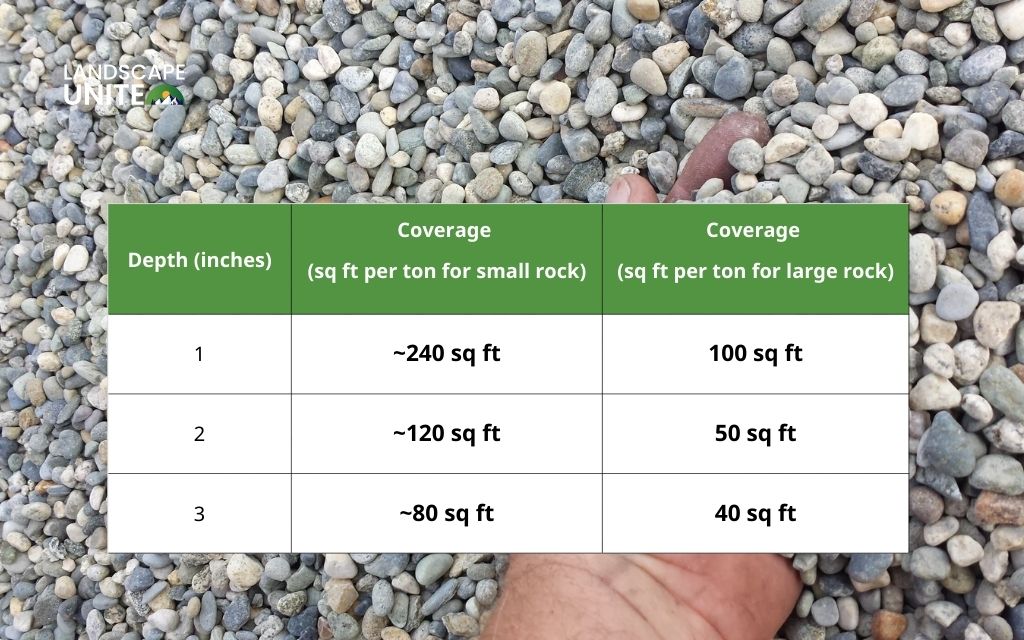
Coverage per ton at common depths
Average estimates from supplier charts:
| Depth (inches) | Coverage (sq ft per ton for small rock) | Coverage (sq ft per ton for large rock) |
| 1 | ~240 sq ft | 100 sq ft |
| 2 | ~120 sq ft | 50 sq ft |
| 3 | ~80 sq ft | 40 sq ft |
Always verify with the supplier since local mixes and rock shapes can affect density and coverage.
When to rely on charts instead of formulas
Charts are ideal for quick planning or shopping when you need a ballpark estimate. Several regional suppliers adjust charts to match local installation practices, which is useful when deciding on standard depths before measuring in detail.
Factoring in cost, delivery, and waste
Estimating your budget
Once you have your numbers in yards or tons, multiply by the local price range per unit and add delivery fees for a rough cost. Prices vary by rock type, so for more details on costs, read more on our blog or visit Mile High Lifescape for professional guidance.
Planning for extra rock and future touch‑ups
Order slightly more than your calculation to cover settling or minor mistakes. Having a small reserve helps with future touch‑ups without wasting space or money.
Troubleshooting common rock calculation mistakes
- Forgetting to convert inches to feet before using the formula.
- Mixing measurement units (using feet in one area, inches in another).
- Ignoring rock size or compaction which affects coverage.
Check these details before finalizing your order. If your yard surface is uneven or sloped, plan a little extra material for coverage compensation.
Quick reference: simple formulas and tips
| Step | Formula | Purpose |
| 1 | Length × Width | Find area (sq ft) |
| 2 | Depth ÷ 12 | Convert inches to feet |
| 3 | (L × W × D in feet) ÷ 27 | Get cubic yards |
| 4 | Cubic yards × Density factor | Get tons |
Use formulas to double‑check your results, calculators for convenience, and charts for quick planning.
FAQs about calculate landscape rock
How do I calculate how much landscape rock I need for my yard?
Measure your area (L×W), convert depth from inches to feet, calculate cubic yards, then multiply by the rock’s density to convert to tons.
How deep should landscape rock be in flower beds or around the house?
2–4 inches is typical. Deeper layers help with weed control and longer‑lasting coverage.
How many square feet does a ton of landscape rock cover?
On average, 120 sq ft per ton at 2 inches for small rock, and 40–60 sq ft for larger decorative stones.
Should I buy landscape rock by the yard or by the ton?
Suppliers sell both ways. Yards show volume, tons show weight; calculators can switch easily between the two.
Can I rely on online landscape rock calculators, or do I still need to measure?
They provide solid estimates but only if your measurements and depth inputs are correct. Always double‑check with a tape measure.
Conclusion
Now you know how to calculate landscape rock with confidence. Grab a tape measure, jot down your area sizes, and try the formulas or an online calculator to plan your next project. Landscape Unite is your friendly gardening and landscape blog for homeowners who want smart, simple outdoor solutions.
For more expert tips and step‑by‑step guides, contact Landscape Unite and explore our latest posts to keep your landscaping projects beautiful and budget‑friendly.