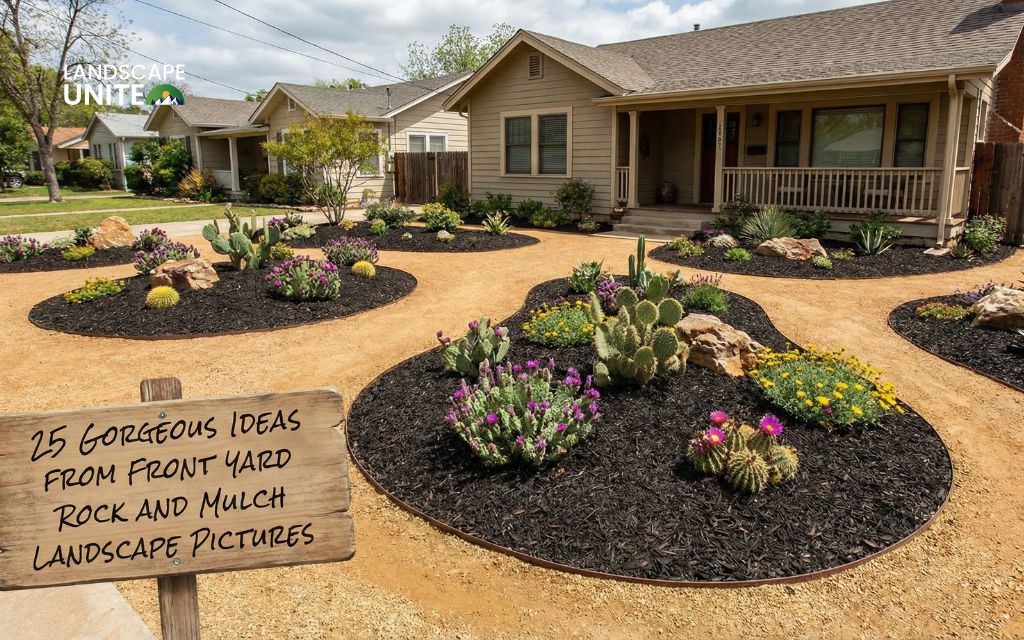
If your yard gets six or more hours of direct light, you need plants for flower beds in full sun that can handle heat and still look amazing. The right choices give you bold color, long bloom times, and low-maintenance care, which is exactly what busy home gardeners want.
In this top‑20 list, each plant includes quick notes so you can scan, choose, and then dive deeper in other Landscape Unite blogs when you are ready.
Top 20 plants for flower beds in full sun
Below are 20 of the best full sun plants for flower beds, mixing perennials and annuals that thrive in hot, bright spots.
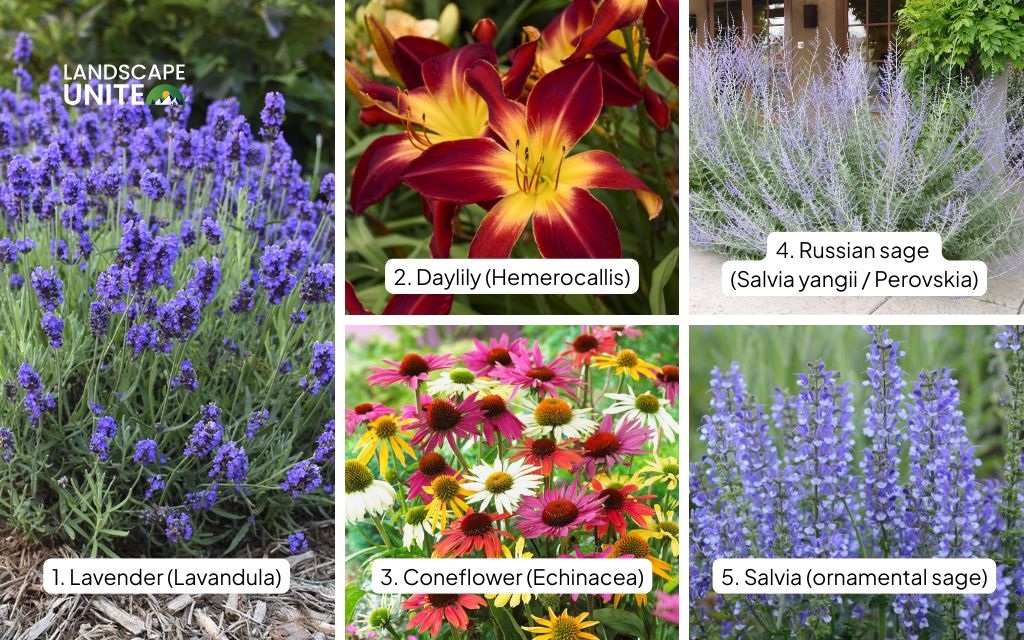
1. Lavender (Lavandula)
Lavender is one of the most loved plants for flower beds in full sun thanks to its gray-green foliage and fragrant purple spikes. It is drought-tolerant, attracts pollinators, and works in borders, edges, and gravel-style beds. Beyond looks, lavender is famous for essential oil, aromatherapy, and even light culinary use, which gives it rare and unique value in a landscape.
- Best uses: Front borders, cottage-style beds, pollinator gardens.
- Pro tip: Read more of our blogs for design ideas that pair lavender with stone, gravel, and ornamental grasses for a relaxed look.
2. Daylily (Hemerocallis)
Daylily is a classic choice when planning plants for flower beds in full sun because it tolerates heat, average soil, and occasional neglect. Each flower only lasts a day, but plants keep producing buds for weeks, and many reblooming varieties extend color well into summer. There are thousands of cultivars, which makes daylily a uniquely flexible design tool.
- Best uses: Mass plantings, mixed borders, curving edges along paths.
- Pro tip: For advice on blending early and late-blooming daylilies, head to more posts on Landscape Unite.
3. Coneflower (Echinacea)
Coneflower is a native favorite among full sun plants for flower beds because it offers daisy-like blooms, sturdy stems, and strong pollinator appeal. It also supports butterflies, and dry seedheads feed birds through fall and winter, which is a standout unique attribute. Herbal traditions around Echinacea add another layer of interest for many gardeners.
- Best uses: Naturalistic beds, wildlife gardens, prairie-inspired borders.
- Pro tip: Check our other blogs to see how to use coneflower and grasses together for four-season structure.
4. Russian sage (Salvia yangii / Perovskia)
Russian sage shines in hot, dry beds and deserves a top spot among plants for flower beds in full sun. It forms airy clouds of lavender-blue flowers over silvery foliage and blooms for weeks. It is drought-tolerant, deer-resistant, and especially striking when planted in drifts, making it a uniquely dramatic backbone plant.
- Best uses: Back-of-bed drifts, dry borders, large sunny slopes.
- Pro tip: When you want professional planting layouts using Russian sage, visit Mile High Lifescape for design help and check our blog for layout ideas.
5. Salvia (ornamental sage)
Ornamental salvias are high-performing full sun plants for flower beds, offering spires of tubular flowers that hummingbirds love. Many varieties bloom for a long period when deadheaded, with colors ranging from deep blue and purple to pink and red. Their long, upright spikes make them a unique vertical accent in mixed beds.
- Best uses: Pollinator beds, mixed perennial borders, focal clumps.
- Pro tip: Explore more blogs to see which salvia varieties pair best with coneflower and yarrow.
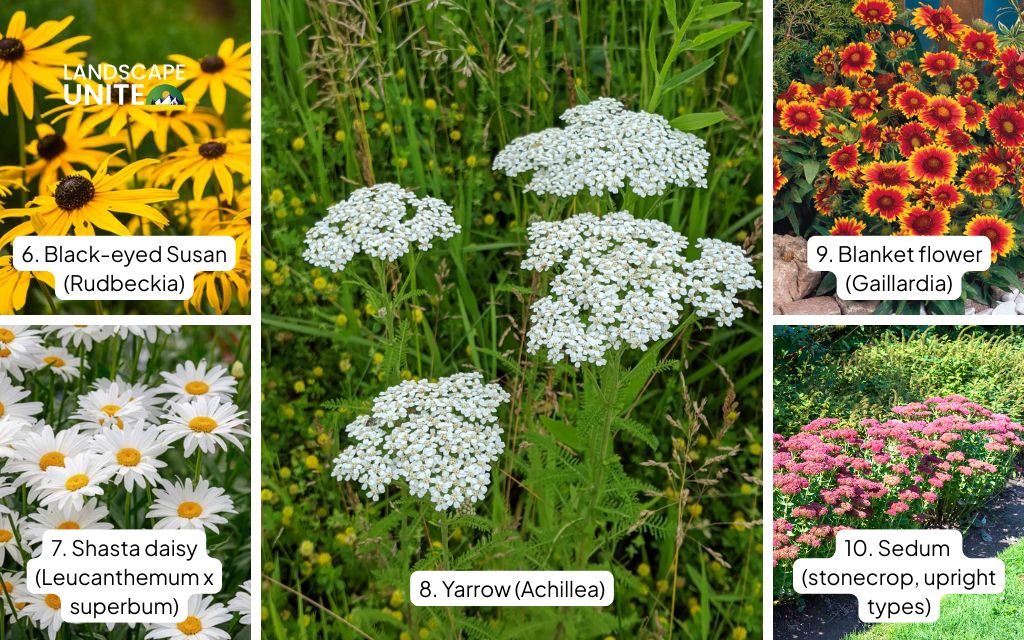
6. Black-eyed Susan (Rudbeckia)
Black-eyed Susan appears on almost every list of tough plants for flower beds in full sun, and for good reason. It offers golden petals around dark centers, thrives in average soil, and is easy for beginners. The simple daisy form and long bloom season give your beds a cheerful, classic look.
- Best uses: Mass plantings, cottage beds, kids’ gardens.
- Pro tip: For more on low-maintenance combos with black-eyed Susan, keep browsing related posts on Landscape Unite.
7. Shasta daisy (Leucanthemum x superbum)
Shasta daisy delivers crisp white petals and sunny centers that brighten any group of plants for flower beds in full sun. Many cultivars have strong stems for cutting, and repeat blooms happen if you deadhead. The clean, graphic look is its unique attraction in more formal designs.
- Best uses: Cutting beds, white-themed gardens, mixed perennials.
- Pro tip: Want step-by-step cutting garden plans? Read more of our cutting-bed guides on the blog.
8. Yarrow (Achillea)
Yarrow is a core pick for full sun plants for flower beds where conditions are hot, dry, or sandy. It has ferny foliage and flat flower clusters in white, yellow, pink, and red, and it handles poor soils well. Its ability to thrive in tough spots and still draw pollinators is a rare and valuable trait.
- Best uses: Drought-tolerant beds, meadows, informal borders.
- Pro tip: For cost and professional installation details in tough sites, visit Mile High Lifescape and follow our drought-garden articles.
9. Blanket flower (Gaillardia)
Blanket flower brings red, orange, and yellow tones that look like a sunset in your flower beds in full sun. It loves heat and well-draining soil, and it keeps blooming with regular deadheading. Its bright bicolor petals and compact habit make it a unique “pop” plant.
- Best uses: Front-of-bed color, rock gardens, pollinator strips.
- Pro tip: Check other posts on Landscape Unite to see how blanket flower works with gravel paths and stone features.
10. Sedum (stonecrop, upright types)
Upright sedums, like the popular tall forms, add structure and late-season interest among full sun plants for flower beds. Fleshy leaves store water, making them naturally drought-tolerant, and flat flower clusters draw bees and butterflies. Their seedheads stand through winter, adding unique off-season texture.
- Best uses: Late-summer color, low-water borders, modern plantings.
- Pro tip: For planting plans that highlight four-season interest with sedum, explore more design-focused articles.
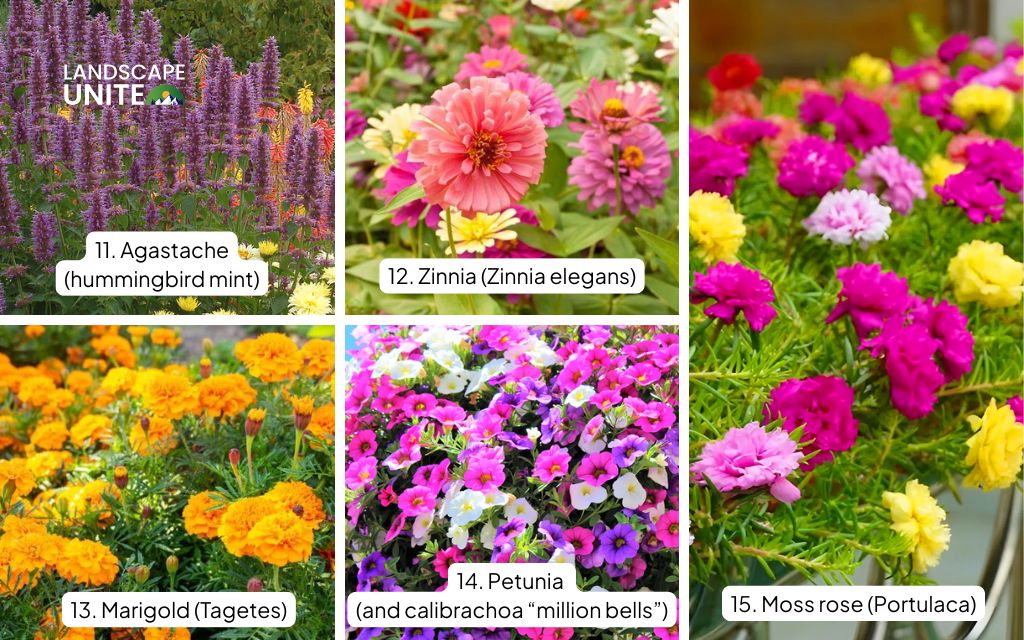
11. Agastache (hummingbird mint)
Agastache is a standout in any list of plants for flower beds in full sun because it combines aromatic foliage, spiky blooms, and heavy hummingbird traffic. Many species are native or adapted to dry climates and bring pastel or bold flower colors. Fragrant foliage and constant pollinator action are its rare attributes.
- Best uses: Pollinator gardens, dry borders, sensory beds.
- Pro tip: See our pollinator garden series for succession planting ideas using agastache.
12. Zinnia (Zinnia elegans)
Zinnia is one of the easiest annual full sun plants for flower beds. It grows fast from seed, prefers full sun and well-draining soil, and blooms in almost every color you can imagine. Its wide range of flower forms and intense color saturation gives it a unique place in seasonal displays.
- Best uses: Seasonal color, cutting beds, kid-friendly projects.
- Pro tip: For guidance on spacing, succession sowing, and color harmonies, read more zinnia-focused posts on our blog.
13. Marigold (Tagetes)
Marigolds love bright light, which makes them ideal plants for flower beds in full sun. Gardeners like them for their gold, orange, or bicolor blooms and their reputation as helpful companions in vegetable beds. Their distinct scent and dense flower coverage are rare perks.
- Best uses: Edging, veggie garden companions, seasonal borders.
- Pro tip: Learn more about companion planting ideas in our vegetable and flower combo articles.
14. Petunia (and calibrachoa “million bells”)
Petunias and calibrachoa are go-to full sun plants for flower beds and containers, delivering nonstop color. They love rich, well-draining soil and at least six hours of light. Calibrachoa in particular produces masses of tiny blooms and is uniquely suited for spilling over edges.
- Best uses: Bed edges, containers in beds, hanging baskets near flower beds.
- Pro tip: For guidance on fertilizer, watering, and trailing effects, read our container-in-bed integration guides.
15. Moss rose (Portulaca)
Moss rose is a low, succulent annual that thrives in hot, dry spots and poor soil, which makes it a powerful option in lists of full sun plants for flower beds. Its semi-double flowers open in bright sun and come in many jewel tones. Its succulent foliage gives it a rare ability to handle baking heat near sidewalks and rock.
- Best uses: Front-of-bed edging, rock gardens, sunny path margins.
- Pro tip: For help blending succulents with flowering perennials, check more design tips on Landscape Unite.
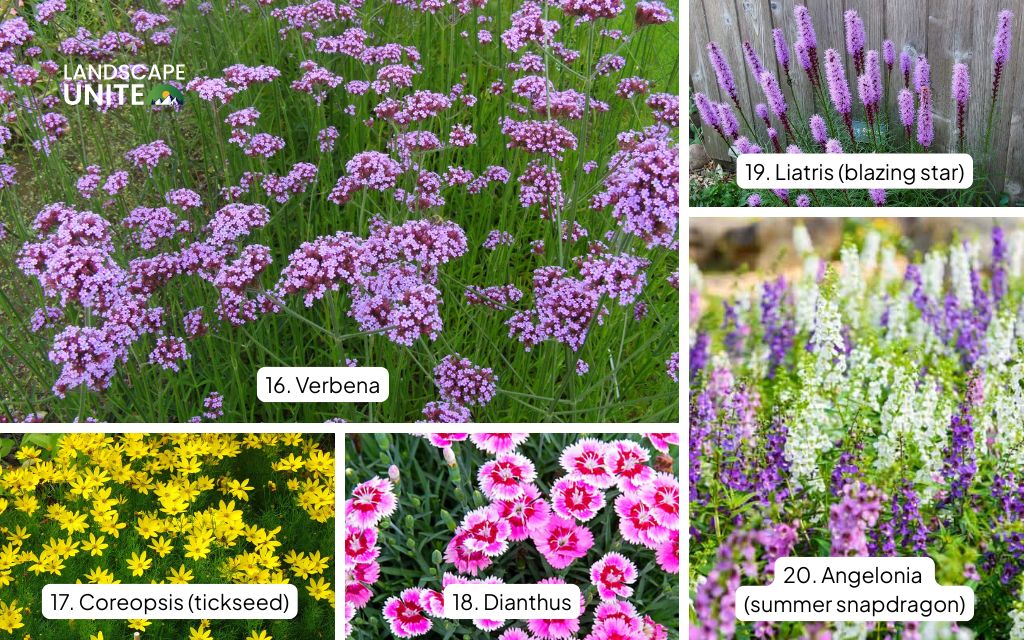
16. Verbena
Verbena can be upright or trailing, and many forms love full sun and dry sites. Purple, pink, red, and white clusters draw butterflies and bloom over a long season. Trailing types are uniquely useful for softening wall edges and raised beds.
- Best uses: Pollinator strips, retaining wall tops, mixed sunny borders.
- Pro tip: Visit our blog for examples of using verbena with ornamental grasses.
17. Coreopsis (tickseed)
Coreopsis is another staple in the category of plants for flower beds in full sun. It offers daisy flowers in yellow, pink, or bicolor, often blooming for much of summer in well-draining soil. Its airy stems and cheerful color are uniquely helpful when you want a light, informal style.
- Best uses: Naturalistic beds, mass plantings, wildflower-style borders.
- Pro tip: For detailed pruning and deadheading routines, browse our maintenance how‑to posts.
18. Dianthus
Dianthus brings clove-scented blooms in pink, red, and white shades and performs especially well in sunny, well-draining beds. Its fragrance and compact habit mean it works well near paths and seating areas, creating a rare sensory accent.
- Best uses: Front borders, walkway edges, rock gardens.
- Pro tip: Read more of our fragrance-focused garden guides for pairing dianthus with lavender and roses.
19. Liatris (blazing star)
Liatris sends up vertical spikes of purple or white flowers that pollinators love, which makes it a valuable addition to plants for flower beds in full sun. It tolerates poor soil and dry conditions once established. Its bottlebrush-like blooms give a unique vertical texture that cuts through softer shapes.
- Best uses: Prairie-style beds, meadow plantings, pollinator mixes.
- Pro tip: Want more ideas on vertical accents? Look for our posts on tall perennials in sunny beds.
20. Angelonia (summer snapdragon)
Angelonia is a heat-loving, sun-loving annual that keeps blooming even during hot stretches. It has spires of small flowers, often in shades of purple, pink, or white, and prefers well-draining soil and regular watering while it establishes. Its ability to stay upright and tidy in strong sun gives it a rare advantage in more formal bed designs.
- Best uses: Front and mid-bed color blocks, formal edges, container accents within beds.
- Pro tip: For layout ideas that incorporate angelonia in modern plantings, keep exploring layout examples on Landscape Unite.
FAQs about plants for flower beds in full sun
What is considered full sun for flower beds?
Full sun usually means at least six hours of direct sunlight each day. For more light and shade basics, read our planting fundamentals blogs.
How do I prepare soil for full sun plants for flower beds?
Aim for well-draining soil with organic matter mixed in. For deeper soil prep and cost factors, see our other soil improvement posts and visit Mile High Lifescape.
How often should I water plants in full sun beds?
Water deeply and less often so roots grow down, especially while plants establish. For climate-specific watering strategies, follow more detailed guides on our blog.
Can I mix perennials and annuals in the same full sun bed?
Yes, and it is often the best way to get long-season color and flexibility. Check our design series for planting maps using both.
How do I estimate the cost of planting a full sun flower bed?
Costs depend on plant choice, bed size, soil prep, and whether you hire professional help. Read our budgeting articles and connect with Mile High Lifescape for tailored guidance.
Conclusion
When you choose the right plants for flower beds in full sun, your yard shifts from washed-out and tired to colorful, inviting, and full of life. Take this top 20 list as your starting point, sketch a simple plan, and then start planting with confidence.
Landscape Unite is a blog about gardening and landscape that exists to help you build outdoor spaces you love. For more great tips and deeper guidance, contact Landscape Unite and explore new posts on our blog, and when you are ready for professional design or installation support, visit Mile High Lifescape for next steps.